
What Is a Café Racer Leather Jacket? History, Features & Style Guide
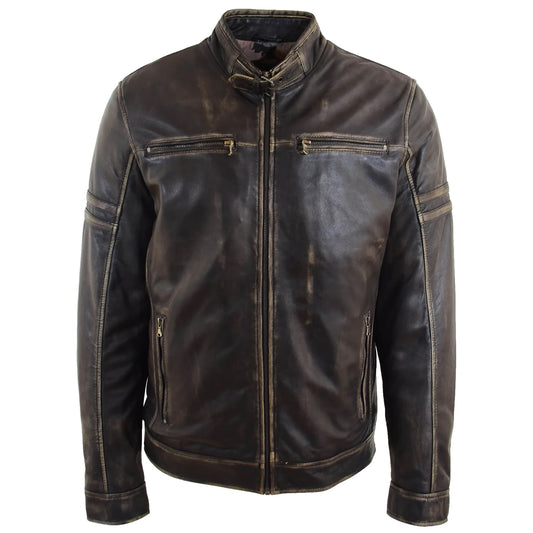
A café racer leather jacket (often called a men’s cafe leather jacket or café racer jacket) is the minimalist, streamlined cousin of the classic biker jacket. It’s defined by a clean front, straight center zip, and a short stand/band (mandarin) collar—a design originally tied to riders who prioritized speed, mobility, and reduced wind flap over heavy hardware and bulky lapels.
Today, the café racer leather jacket is one of the most versatile outerwear pieces you can own: it looks sharp with denim and boots, but it also works with modern streetwear and even smart-casual outfits. This guide explains what it is, where it comes from, what to look for in a quality build, and how to style it confidently.
What is a café racer jacket?
A café racer jacket is a short, fitted leather riding jacket with an intentionally simple layout:
- Straight, center-front zipper
- Stand collar (mandarin/band collar) often with a snap or throat latch
- Minimal external hardware (fewer belts, epaulets, and oversized lapels)
- Close, streamlined silhouette built for movement and reduced wind resistance
This design language is why the café racer style is sometimes described as the “clean” or “no-frills” leather jacket. It’s not trying to look loud—it’s trying to look fast.
Café racer culture: the origins behind the name
To understand the jacket, you need the culture behind it.
The UK “Rockers” and the “Ton-Up Boys”
The café racer movement is closely tied to late-1950s and 1960s Britain, where a youth motorcycling subculture—often called Rockers or Ton-Up Boys—gathered around transport cafés and road culture. The “ton-up” label referred to riders chasing 100 mph (“the ton”).
The Ace Café and the café-to-café idea
The Ace Café in London is a cornerstone of this story. Its own history notes the arrival of the Ton-Up Boys in the post-war years, alongside the rise of rock ’n’ roll and café culture.
The London Museum also documents the Ace Café’s popularity with the young motorbike riders known as “rockers” or “ton-up boys.”
This scene—bikes, speed, style, and identity—shaped the aesthetic: stripped-down, functional, and aggressively wearable.
Shop > Men's Leather Racer Jackets
How the café racer jacket evolved as a design
As riders began favoring lighter, more aerodynamic gear, the leather jacket silhouette simplified. A strong, well-known summary from Heddels explains that the moto/café racer jacket style developed in England and became popular in the 1960s, tied to riders modifying bikes and racing between pubs/cafés—driving a need for clean, minimal, lightweight leathers.
Over time, the style jumped from riding circles into mainstream fashion. Heritage leather makers and modern brands kept the core shape but expanded options like:
- different leather types (cowhide, lambskin)
- quilted panels
- warmer linings
- modern fit blocks
Key features of a true café racer leather jacket
If you’re browsing café racer jackets online, you’ll see many “inspired” versions. Here are the features that consistently signal the real style.
1) Stand collar (mandarin/band) with snap or throat latch
This is the signature feature. It’s a short upright collar that stays close to the neck and reduces wind movement compared with wide lapels.
Example: Schott NYC explicitly highlights the stand-up mandarin-style collar with snap closure as a protective, functional detail.
2) Straight center zipper
Unlike the classic “Perfecto”/double-rider jacket with an angled zip, café racers run a straight zip down the middle for a clean, symmetrical look.
3) Minimal exterior detailing
Most café racer jackets skip the bold extras—big lapels, heavy belts, oversized epaulets—and focus on a sleek silhouette. This minimalist DNA is repeatedly cited in modern explainers and product descriptions from established leather brands.
4) Purpose-built mobility
A good café racer jacket often includes movement features like:
- bi-swing back (extra range in shoulders)
- articulated sleeves
- fitted arms to cuffs
Schott’s product descriptions commonly call out these mobility details in their racer/café styles.
5) Zipped cuffs and practical pockets
Zipped cuffs help keep sleeves tight while riding and make it easier to put on/take off gloves. Pockets are usually zippered and placed cleanly to avoid clutter.
Café racer jacket vs biker jacket: what’s the difference?
This is one of the most searched comparisons—and it matters for both style and comfort.
Café racer jacket
- Stand collar, minimal hardware
- Straight zip
- Clean, tapered silhouette
- “refined speed” vibe
Classic biker/double-rider jacket
- Wide lapels, snap-down collar
- Angled/diagonal zip
- More hardware (belt, epaulets)
- “rebellion/rock” vibe
If you want the leather jacket style that works with the widest range of outfits—from tees to turtlenecks—the café racer usually wins because it’s visually simpler.
Shop > Women's Leather Racer Jackets
What leather is best for a men’s cafe leather jacket?
Leather choice changes how the jacket feels, drapes, and ages. Here’s a practical breakdown:
Cowhide (durable, structured)
- Tough, abrasion-resistant
- Holds shape well
- Develops strong patina
Many classic racer jackets are built in cowhide for durability.
Lambskin (soft, lightweight, fashion-forward)
- Supple feel
- Drapes closer to the body
- Great for everyday city wear
Best if you prioritize comfort and sleekness over ruggedness.
Goatskin (balanced “best of both”)
- Naturally pebbled grain
- Tougher than lamb, often lighter than heavy cowhide
- Great for frequent wear
Pro tip: If your goal is “one jacket for everything,” a medium-weight cowhide or goatskin café racer is a safe bet. If you want the most comfortable daily jacket, lambskin can feel unbeatable.
Fit guide: how a café racer jacket should fit
The café racer silhouette is meant to look close and sharp, but not restrictive.
Ideal fit checkpoints
- Shoulders: seam sits at your shoulder bone (no droop)
- Chest: you can zip it without strain; you can breathe deeply
- Sleeves: end at wrist bone; slightly longer is okay for riding posture
- Length: typically hits around the belt line (classic moto proportion)
- Layering: room for a T-shirt + light sweater/hoodie (depending on climate)
Because café racer jackets are streamlined, sizing up too much can make the jacket look boxy and defeat the point. If you want a relaxed streetwear fit, choose a style intentionally cut that way—not just an oversized size.
Style guide: how to wear café racer jackets (5 go-to outfits)
Here are proven outfit formulas that work for most men.
1) The classic café racer look
- Black café racer jacket
- White tee
- Dark slim/straight jeans
- Leather boots
This is the “forever” uniform: sharp, masculine, minimal.
2) Smart-casual city outfit
- Brown café racer leather jacket
- Fine knit or turtleneck
- Chinos or tailored wool trousers
- Chelsea boots
Because café racers don’t have big lapels, they look cleaner with elevated basics.
3) Streetwear minimal
- Café racer jacket (black or dark brown)
- Hoodie (no huge graphics)
- Relaxed jeans or cargos
- Chunky sneakers or boots
The jacket becomes the premium, structured layer that upgrades casual pieces.
4) Workwear-inspired
- Café racer jacket
- Flannel or denim shirt
- Raw denim
- Moc-toe boots
This leans into heritage textures and looks best with brown, whiskey, or distressed leather.
5) Monochrome modern
- Black café racer jacket
- Black tee
- Black jeans
- Black boots/sneakers
Simple. High impact. Great for photos and night looks.
What to look for when buying a quality café racer leather jacket
If you want a jacket that lasts years (and looks better over time), focus on construction—not just appearance.
1) Stitching and seam integrity
Check for:
- straight, even stitch lines
- reinforced stress points (pockets, cuffs, zipper ends)
- no loose threads
2) Lining quality
A good lining should feel smooth, breathe well, and be cleanly stitched. (Cheap linings tear first.)
3) Hardware
Zippers should glide cleanly and feel substantial. Better jackets use higher-grade metal hardware.
4) Panel alignment
A quality café racer jacket should look symmetrical when zipped—collar, front panels, pocket placement.
5) Transparency
Trustworthy brands clearly state:
- leather type (cow/lamb/goat)
- lining materials
- care instructions
- sizing guidance
This is also part of modern EEAT: buyers want clarity.
Café racer jackets for riding: fashion vs protection
A classic café racer jacket is a motorcycle heritage piece—but not all fashion café racers are designed for impact protection.
If you ride:
- Look for thicker leather and reinforced seams
- Consider jackets designed to accept armor (or already include it)
- Ensure sleeve length and shoulder mobility support riding posture
If you don’t ride:
- You can choose softer leathers and lighter linings for comfort
How to care for a café racer leather jacket
Basic care keeps leather looking expensive for years:
- Wipe down with a dry or slightly damp cloth after wear
- Let it air out; don’t store damp
- Condition leather periodically (lightly—don’t overdo it)
- Use wide hangers to keep shoulder shape
Avoid direct heat (radiators, hair dryers). Leather prefers slow drying.
Why café racer jackets remain a menswear essential
The café racer leather jacket has lasted because it’s built on a rare combination:
- heritage credibility (real motorcycling roots)
- clean design (works across trends)
- versatility (casual → smart-casual)
- timeless masculinity without being costume-like
For a brand like Regals Leather, café racer jackets are also a natural fit: they showcase craftsmanship (leather selection, fit, stitching) without hiding behind excessive design noise.