
Full Motorcycle Protective Gear Guide for Every Rider
Riding a motorcycle is one of the most exhilarating experiences on the road. It is also one where the right gear makes an enormous difference — not just to your comfort, but to your safety.
Unlike a car, a motorcycle offers no cage around you. In the event of a fall or collision, your gear is the only thing standing between you and the road. That is why choosing the right protective equipment is not optional — it is essential.
This guide covers every piece of protective riding gear a motorcyclist should own, what to look for in each item, and why each one matters. Whether you are a new rider gearing up for the first time or an experienced rider reviewing your kit, this is a complete reference for everything you need to ride protected.
In this guide, you will learn:
- Every essential piece of motorcycle protective gear explained
- What protection standards and certifications to look for
- How each piece of gear protects you in a real accident
- What to prioritise if you are building your kit gradually
- Common gear mistakes riders make
Why Motorcycle Protective Gear Matters
On a motorcycle, your body absorbs impact energy directly — there is no vehicle structure to protect you. Road rash, blunt force trauma to the head, spine, knees, and ankles account for the most serious motorcycle injuries. Purpose-built protective gear is designed specifically to address each of these points, using materials and construction methods that everyday clothing simply cannot replicate.
1- The Helmet — Your Most Critical Piece of Gear
No piece of motorcycle gear is more important than a helmet. Head injuries are the leading cause of serious and fatal outcomes in motorcycle accidents, and a quality helmet dramatically reduces that risk.
Types of Helmets
Full-face helmets offer the most complete protection, covering the entire head including the chin and jaw — which accounts for a significant proportion of helmet impacts in real accidents. They also offer better wind and noise protection, making them ideal for regular and long-distance riding.
Modular or flip-front helmets combine full-face coverage with the convenience of a chin bar that lifts. Popular among touring riders, they offer nearly the same protection as a full-face helmet while allowing easier communication and ventilation at stops.
Open-face helmets cover the top, sides, and back of the head but leave the face exposed. They offer less protection than full-face options and are better suited to low-speed urban riding than motorway or track use.
Half helmets provide minimal coverage and are generally not recommended for serious riding.
What to Look For
- ECE 22.06 is the current European safety standard — look for this certification as a baseline
- Sharp rating (UK helmet safety scheme) provides independent star ratings from 1 to 5 — aim for 4 or 5 stars
- Proper fit is essential — a helmet should sit snugly with no pressure points and no movement when you try to shake it while fastened
- Replace your helmet after any significant impact, even if there is no visible damage — the internal foam compresses on impact and will not protect you again
2- The Jacket — Protection You Wear Every Ride
A quality motorcycle jacket serves two purposes: protecting the skin from road rash and housing armour at key impact points.
Materials
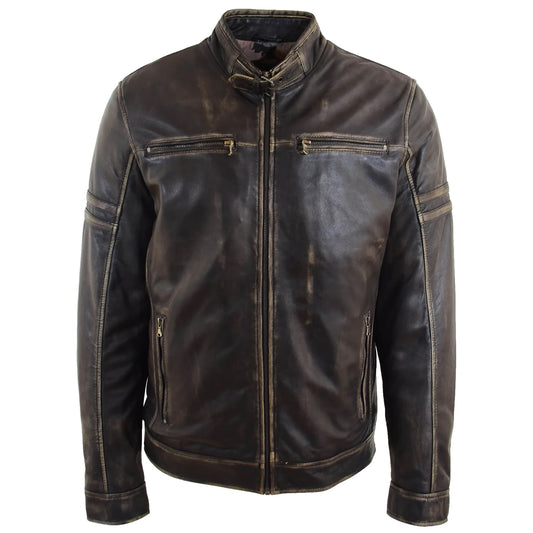
Leather is the traditional and still highly effective choice for motorcycle jackets. Full-grain leather offers excellent abrasion resistance — significantly better than textile alternatives at the same thickness. It also moulds to the body over time, providing a comfortable and protective fit.
Textile jackets made from Cordura, ballistic nylon, or similar technical fabrics offer good abrasion resistance and are often more practical in varying weather conditions. Many come with waterproof membranes and ventilation systems, making them versatile for year-round riding.
Armour Placement
A proper motorcycle jacket should include armour or protection at:
- Shoulders — one of the first points of contact in a fall
- Elbows — commonly impacted in low-side falls
- Back — optional in some jackets but highly recommended; look for CE Level 2 back protectors
Certification to Look For
- CE EN 13595 — the European standard for motorcycle clothing
- CE Level 1 or Level 2 armour inserts — Level 2 offers greater impact absorption
3- Gloves — Protecting Your First Point of Contact
In almost every fall, the rider instinctively puts their hands out to break the impact. This makes gloves one of the most important and most overlooked pieces of protective gear.
Without gloves, road rash to the palms and fingers is nearly inevitable in even a minor slide. With the right gloves, your hands are protected by reinforced palms, knuckle armour, and abrasion-resistant materials.
What to Look for in Motorcycle Gloves
- Hard knuckle protection — moulded plastic or carbon fibre over the knuckles
- Palm sliders or reinforcement — protects the heel of the hand, which takes the most force in a fall
- Wrist closure — a secure fastening that keeps the glove on during impact
- CE EN 13594 certification — the European standard for motorcycle gloves; Level 2 offers the highest protection
Types of Gloves
Summer gloves are lighter with more ventilation, suitable for warmer conditions but offering less insulation. Look for those that do not sacrifice armour for airflow.
Winter gloves are heavier, often waterproof, and insulated. Essential for cold-weather riding where hand numbness significantly affects control.
All-season or mid-season gloves are versatile options that work across a range of conditions — a good starting point for new riders.
4- Motorcycle Trousers — Protecting Your Lower Body
Regular jeans and trousers offer almost no protection in a motorcycle accident. The abrasion resistance of standard denim is poor, and it tears quickly against tarmac. Purpose-built motorcycle trousers change this entirely.
Options
Leather motorcycle pants offer the best abrasion resistance and are a popular choice for sport and performance riding. They typically include armour at the knees and hips.
Textile motorcycle trousers in Cordura or similar materials are more practical for everyday use, often featuring waterproofing, removable liners, and ventilation. Many include integration points that connect to a compatible jacket, creating a full suit for additional safety.
Kevlar jeans are a popular compromise — they look like regular jeans but are lined with Kevlar or similar aramid fibre, dramatically improving abrasion resistance. Most include armour pockets at the knees and hips.
Key Features to Look For
- CE EN 17092 certification — the current European standard for motorcycle trousers
- Hip and knee armour — CE Level 1 minimum; Level 2 preferred
- Hip protector pockets — not all trousers include hip armour as standard; check before buying
5- Boots — Ankle and Foot Protection You Cannot Ignore
The ankle is one of the most commonly injured areas in motorcycle accidents. Regular shoes and trainers offer no lateral support and no protection against twisting, crushing, or abrasion.
A proper motorcycle boot supports and protects the ankle, resists torsion, and provides grip on wet or oily surfaces.
What to Look For
- Ankle protection — internal or external reinforcement around the ankle joint
- Toe box reinforcement — protects the toes from crushing impact
- Oil-resistant, non-slip soles — essential for grip in the variety of surfaces rider’s encounter
- Fastening security — laces can catch on pegs; boots with buckles, zips, or Velcro closures are safer
- CE EN 13634 certification — the European standard for motorcycle footwear; look for Level 2 across all categories
Boot Styles
Short motorcycle boots that sit above the ankle are popular for urban and everyday riding — they look like regular boots but contain protective features inside.
Mid and tall boots offer more coverage and are preferred for touring, adventure riding, and sport use.
6- Body Armour and Back Protectors
Many jackets and trousers include armour as standard, but not all armour is created equal. A standalone back protector is one of the most valuable additions to any rider's kit, particularly for those whose jacket only includes a basic foam pad.
Back Protector Levels
- CE Level 1 — meets basic requirements; absorbs and distributes impact force adequately
- CE Level 2 — higher performance; transmits significantly less force to the spine in testing; recommended for regular riders
A spine injury can be life-changing. A CE Level 2 back protector is a modest investment against a serious risk.
Building Your Kit: What to Prioritise
If you are putting your riding kit together gradually, prioritise in this order:
- Helmet — non-negotiable; buy the best you can afford
- Gloves — hands are first contact in almost every fall
- Jacket with armour — covers upper body and critical impact points
- Boots — ankle injuries are common and serious
- Trousers with armour — completes lower body protection
- Back protector — upgrade from basic foam pad as soon as possible
Common Gear Mistakes to Avoid
- Riding in a leather jacket that is not CE-certified — not all leather jackets are built for motorcycle use
- Buying a used helmet — you cannot verify its history; it may have already absorbed an impact
- Wearing summer gear in all conditions — cold and rain affect concentration; use appropriate gear for the weather
- Skipping gloves on short trips — most accidents happen close to home
- Neglecting to replace worn or damaged gear — protective gear has a lifespan; inspect it regularly
Final Thoughts
Good riding gear does not guarantee you will never be involved in an accident. What it does is significantly change the outcome if you are. Every piece of protective gear serves a specific purpose, covering a specific vulnerability. When you wear a complete set of quality riding gear, you are giving yourself the best possible chance of walking away from a situation that could otherwise be serious.
Invest in your gear the same way you invest in your motorcycle. Ride with the right kit every single time — not just on long journeys, not just on fast roads, but every time you get on the bike.
The road does not give you second chances. Your gear does.