
History of Leather Jackets: From Military Origins to Modern Fashion
Leather jackets have journeyed from utilitarian military wear to a global fashion staple over the past century. Originally designed for practicality and protection, these rugged garments have evolved through decades of cultural shifts. From the early bomber jackets keeping World War I pilots warm, to rebellious biker jackets in Hollywood's golden age, and onward into punk rock, high fashion, and everyday street style – the leather jacket has become an enduring icon of style. This detailed exploration covers the worldwide history and evolution of leather jackets, the development of major styles like bomber and biker jackets, flight and café racer designs, classic sheepskin coats, and the cultural moments that propelled them. We’ll also delve into how leather crafting technology and materials have changed over time, and how both men and women have embraced leather jackets from functional gear to a symbol of cool.
Early Origins: Military and Utility Roots (1900s–1920s)
The story of the leather jacket begins in the early 20th century with roots firmly planted in necessity. In the 1900s, military personnel and aviators turned to leather garments for their durability and protection. During World War I, fighter pilots in uninsulated open-cockpit biplanes wore heavy leather flight jackets to shield themselves from frigid high-altitude winds. In 1917, the U.S. Army established a standard-issue waist-length leather coat for pilots – lined with shearling wool for insulation. This early “flight jacket” was the precursor to the classic bomber jacket, so named later for its association with military bomber crews. British aviators adopted similar thick leather flying coats to battle the cold, and by the late 1920s the Royal Air Force introduced the famed Irvin sheepskin flying jacket for extreme high-altitude warmth.
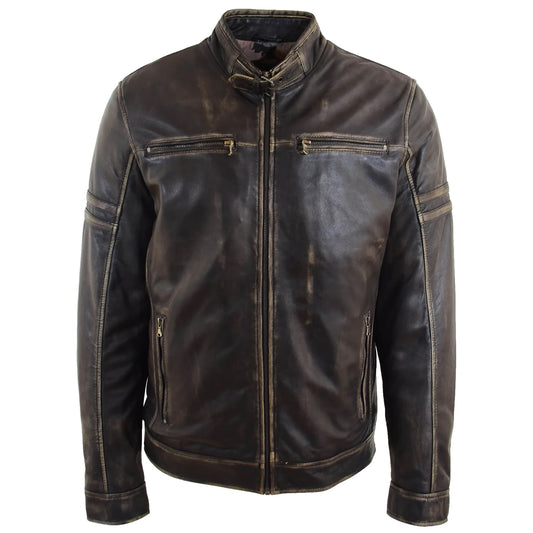
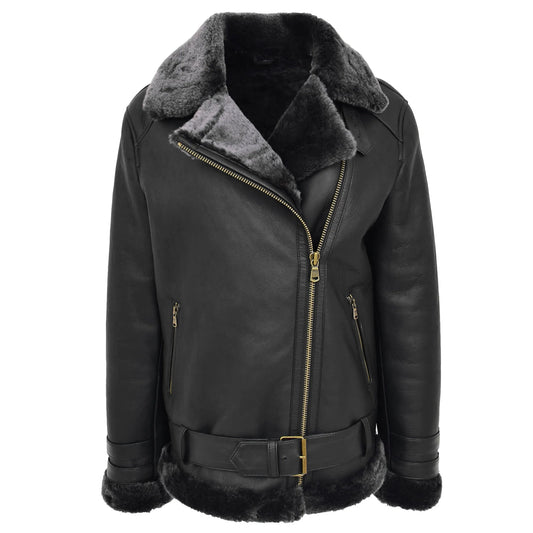
Beyond aviation, leather was a go-to material for tough outdoor clothing. Early motorcycle enthusiasts and military dispatch riders in the 1910s often wore long leather coats or jackets. These garments protected them from the elements on open roads and offered some protection in scrapes on those early motorcycles. Even outside the West, leather jackets found symbolic uses in the turbulent early 20th century – notably, Russian Bolshevik commissars in the 1920s often donned waist-length leather jackets as a sort of revolutionary uniform during the Russian Civil War, projecting an image of militant toughness. By the 1920s, leather jackets were recognized for their utility, but a transition to civilian fashion was just beginning. One milestone came in 1925 when the first modern tailored leather flight jacket, the Type A-1, was introduced for pilots, offering a stylish yet functional design. Then, in 1928, a New York City raincoat maker named Irving Schott designed a purpose-built leather motorcycle jacket for the public. Schott’s jacket – dubbed the Perfecto – was a short, waist-length black leather coat with an asymmetrical zip front, snap-down lapels, and a sturdy belt. This innovative design allowed bikers to lean over their handlebars without the jacket bunching up, and the zipper closure provided better wind protection than traditional buttons. Sold for just $5.50 at the time, the Schott Perfecto was the first widely marketed biker jacket, marking leather’s leap from purely utilitarian gear to edgy civilian attire.
World War II and the Bomber Jacket Boom (1930s–1940s)
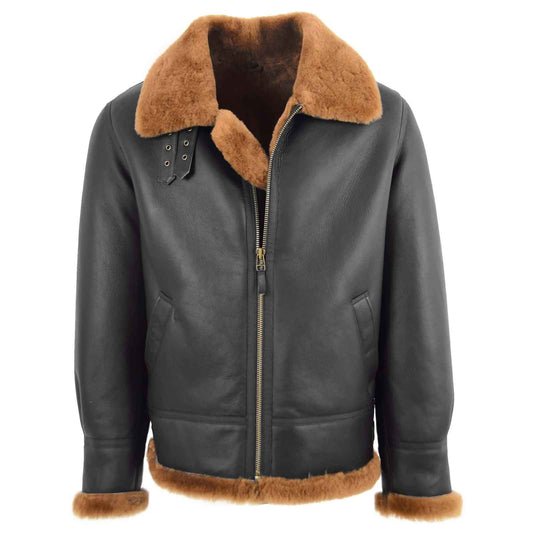
As the world entered the 1930s and 1940s, leather jackets became standard military issue and cemented their legendary status. In the United States, the Army Air Corps introduced the Type A-2 flight jacket in 1931 – a trim, waist-length brown leather jacket (often horsehide or goatskin) with a front zipper, high collar, and snug cuffs. By World War II, thousands of American pilots were wearing A-2 jackets decorated with squadron patches and colorful hand-painted nose art, giving each jacket a personalized touch. The U.S. Navy’s aviators had their own version, the G-1 flight jacket, typically made of goatskin and distinguished by its fur-lined collar. Meanwhile, airmen flying high-altitude bombing missions relied on the B-3 shearling bomber jacket – a heavyweight sheepskin flight jacket with the wool fleece on the inside – to survive the sub-zero temperatures in unpressurized aircraft. These cozy shearling jackets, with their wide sheepskin collars and buckle straps, became iconic symbols of WWII bomber crews and remain classic designs today.
Across the Atlantic, Britain’s Royal Air Force pilots wore similar leather gear. The RAF’s answer to extreme cold was the Irvin flying jacket, a thick sheepskin coat that provided superb insulation for pilots during the Battle of Britain. Leather proved invaluable in war: it was tough, insulating, and relatively resistant to wind and wear. Other military forces also utilized leather jackets for various units – for example, German U-boat captains and officers were known for their long black leather coats, and Soviet tank commanders wore black leather jackets as part of their tank crew uniforms. By war’s end in 1945, the leather flight jacket had achieved legendary status across the globe. Many returning Allied airmen treasured their bomber jackets as proud mementos and continued wearing them in civilian life, bringing a bit of military swagger to post-war street fashion. The image of a rugged pilot in a beat-up brown bomber jacket and aviator sunglasses became an archetype of daring and adventure.
Notably, World War II also saw women don leather flight jackets in certain roles. The American Women Airforce Service Pilots (WASP), a unit of female pilots who ferried aircraft and served on the home front, were issued their own tailored A-2 leather jackets. These women proudly wore their leather bomber jackets with the same aura of cool as their male counterparts. Still, outside of military contexts, mid-century leather jackets remained largely a male domain – it would be a couple more decades before leather jackets became common attire for women in mainstream fashion.
Shop Mens Leather Bomber Jackets
Shop Womens Leather Bomber Jackets
The Perfecto and the 1950s Rebel Era
After WWII, leather jackets rode a wave of popularity into the 1950s – this time as symbols of youthful rebellion and cool. Irving Schott’s Perfecto motorcycle jacket, first sold in 1928, truly found its moment in the post-war era. By the early 1950s, the black double-breasted biker jacket had a small but growing following among motorcycle clubs and even some police motorcycle units (who appreciated its rugged horsehide construction). But it was Hollywood that catapulted the black leather jacket to global fame.
In 1953, actor Marlon Brando roared across the screen in The Wild One, wearing a Schott Perfecto leather jacket as Johnny Strabler, the brooding leader of an outlaw biker gang. That film’s imagery – Brando with a tilted cap, jeans and a white T-shirt, defiant smirk and a cigarette, all topped off by that leather jacket – burned itself into pop culture. The leather jacket became the uniform of the anti-hero and the rebel. Suddenly, every young man wanted the “Brando look,” and many authority figures panicked. In fact, during the mid-1950s, various American high schools banned students from wearing leather jackets on campus, fearing the jacket’s association with delinquency and defiance.
Two years later, James Dean further solidified the leather jacket’s rebellious reputation. In Rebel Without a Cause (1955), Dean’s troubled teen character famously sports a striking red jacket (which was actually a windbreaker in real life), but off-screen and in promotional photos Dean was often seen in a leather jacket. More importantly, his smoldering, misunderstood persona meshed perfectly with the era’s leather-jacketed bad-boy image. By the late 1950s, the emerging greaser subculture – rock-and-roll loving, blue-collar youth with slicked hair – had embraced the leather jacket as part of its uniform, alongside cuffed jeans and pomade. To these teenagers, a scuffed black leather jacket symbolized freedom, nonconformity, and a bit of danger. It was the antithesis of the clean-cut image their parents often wanted. At this time, leather jackets were almost exclusively worn by men; the idea of a respectable young woman wearing a motorcycle jacket was virtually unheard of (aside from a few bold film characters). The 1950s firmly established the leather jacket as the attire of the rebel male, setting the stage for even broader adoption in the decades to come.
The 1960s: Rockers, Mods, and Counterculture Cool
In the 1960s, leather jackets expanded their cultural reach, becoming both a counterculture emblem and a fashionable statement for the in-crowd. In Britain, a clear style divide emerged between the “Mods” and the “Rockers,” two youth subcultures with very different looks. The Rockers were motorcycle enthusiasts who idolized 1950s rock ’n’ roll, and they proudly wore leather jackets (often adorned with club patches, studs, or pins) as they raced their motorcycles from café to café. These young bikers – the original café racers – preferred simple, streamlined leather jackets, sometimes with a mandarin snap collar and minimal ornamentation, designed for speed and practicality. The Rockers’ penchant for black leather, engineer boots, and slicked hair put them at odds with the Mods, who favored sharp suits, parkas, and scooters. This Mods vs. Rockers rivalry, played out in British newspapers and seaside scuffles, actually helped popularize the leather jacket even more. It was the garment that clearly signaled “rock ’n’ roll rebel” in contrast to the Mods’ tailored sophistication.
Meanwhile, across the Atlantic, the leather jacket was solidifying its place in the rock music scene and beyond. The Beatles, during their early club days in Hamburg around 1960, famously wore black leather jackets and pants on stage – a raw, rebellious look quite different from the matching suits they later adopted. Photos of the young Beatles in leather gear circulated and added to the jacket’s rock-star mystique. In the U.S., the influence of rock and Hollywood continued: Elvis Presley, reestablishing himself as the king of rock ’n’ roll in his 1968 TV “Comeback Special,” wore an all-black leather suit (a custom-made outfit inspired by the biker jacket style) that became instantly iconic. That moment showed that leather wasn’t just for outlaws; it could be undeniably sexy and superstar-cool.
At the same time, the counterculture movement of the late ’60s found its own uses for leather. While many hippies and anti-war protesters leaned towards denim, army surplus jackets, and fringe suede vests, more militant activist groups embraced the cleaner look of leather. The Black Panther Party in the United States, for instance, made the simple black leather jacket part of their unofficial uniform (often paired with a black beret) when they took to the streets advocating for civil rights and self-defense. This choice of attire conveyed a tough, no-nonsense attitude and became an iconic image of late-60s activism. On television and film, more women were also stepping into leather, challenging norms: the British TV show The Avengers featured Honor Blackman as Cathy Gale (and later Diana Rigg as Emma Peel) clad in sleek black leather suits during the early to mid-1960s, presenting a rare example of a strong female character in leather gear. By the end of the sixties, the leather jacket had transcended its earlier niche – it was now woven into the fabric of rock ‘n’ roll fashion, youth rebellion, and even political statement. The stage was set for leather jackets to explode into even more diverse subcultures in the 1970s.
The 1970s: Punk, Metal, and Women Break In
If the ’50s gave leather jackets attitude and the ’60s gave them rock-star credibility, the 1970s blew the doors off convention. In the mid-to-late 1970s, the punk rock movement erupted in New York and London, dragging the leather jacket back into the spotlight with a fierce new style. Punk pioneers on both sides of the Atlantic made the black motorcycle jacket practically part of their uniform. In New York, The Ramones hit the stage at CBGB in 1974 wearing battered black Perfecto jackets over torn jeans and T-shirts – a look that became iconic in its minimalist, street-tough simplicity. In London, punk rockers like The Sex Pistols and The Clash followed suit, adopting leather jackets but customizing them with a DIY ethos: they added safety pins, spikes, painted-on slogans, band logos, and anarchy symbols. Suddenly, the leather jacket was more than a piece of clothing – it was a canvas for provocation and personal expression. What had been a relatively clean-cut symbol of 50s rebellion was now deliberately scuffed, safety-pinned, and dripping with attitude. Punk made the leather jacket an emblem of youthful revolt all over again, this time with an even sharper edge.
Simultaneously, another musical wave was embracing leather: heavy metal. In the late ’70s, as metal music evolved and spread, bands like Judas Priest in the UK pioneered a striking leather-clad look. Frontman Rob Halford took the stage in head-to-toe black leather and chrome-studded gear, including dramatic studded leather jackets. This look was partly drawn from underground gay and S&M leather subculture, but when blended with heavy metal theatrics it created a powerful new style that screamed “loud and rebellious.” Metal fans and other bands quickly picked up on the aesthetic. By the end of the decade, whether you were a spiky-haired punk in London or a long-haired metalhead in Los Angeles, a leather jacket (often personalized to your subculture with either punk DIY flair or metal studs and patches) was almost mandatory attire if you wanted to look the part.
Importantly, the 1970s was also the decade when women truly began to claim the leather jacket as their own. Female rock stars were at the forefront of this shift. One trailblazer was Debbie Harry of Blondie, who in the late ’70s often paired a chic dress or t-shirt with a black leather jacket, mixing punk style with New Wave pop appeal. Her effortlessly cool looks in leather encouraged female fans to adopt the jacket not just as “boyfriend’s gear” but as their own fashion statement. Likewise, Joan Jett emerged from the 1970s (starting with The Runaways and going solo by 1980) as an unforgettable image of a woman in a black leather biker jacket, guitar in hand, rocking just as hard as any of her male peers. Seeing confident women like Harry and Jett in leather inspired countless other young women to throw on moto jackets as well. Leather also made its way into mainstream women’s fashion during this era, beyond the rock scene – designers began to incorporate more women’s leather blazers, coats, and trenches in the late 70s, although the true explosion in women’s leather styles would come in the ’80s.
Pop culture of the ’70s reinforced the leather jacket’s expanding appeal. Television contributed a memorable icon in the form of Arthur “The Fonz” Fonzarelli from Happy Days. Although the show aired in the 1970s, it was set in a nostalgic version of the late 1950s and featured Henry Winkler as “The Fonz” – a lovable, cool-guy biker who always wore his brown leather jacket. The Fonz character (and his signature “Aaay!” catchphrase) became hugely popular, bringing the leather jacket into millions of living rooms as a symbol of easy-going, benign cool. This helped soften the garment’s rebellious image; the leather jacket was now relatable and even family-friendly, in a way. By the end of the 1970s, leather jackets were everywhere – embraced by punk rockers and mainstream TV audiences alike, by men and women, across different continents. The jacket’s counterculture cachet was still intact, but it had also firmly planted itself as a staple of everyday style.
Shop Mens Studded Leather Jackets
The 1980s: Mainstream Phenomenon and Pop Fashion
In the 1980s, the leather jacket completed its journey from niche rebel wear to mainstream fashion essential, all while retaining its aura of cool. This decade was defined by big pop culture moments – and many of them featured an unforgettable leather-clad figure. On the big screen, the trend of leather-jacketed heroes and anti-heroes hit a peak. Harrison Ford kicked off the decade as Indiana Jones in Raiders of the Lost Ark (1981), donning a now-famous distressed brown leather bomber jacket as the adventurous archaeologist. Instantly, the classic flight jacket was associated not just with military pilots but with swashbuckling heroism and box-office charm. A few years later, in 1986, Tom Cruise sent sales of G-1 bomber jackets skyrocketing after he wore one (complete with squadron patches and a fluffy fur collar) as Maverick in the mega-hit film Top Gun. Practically overnight, the bomber jacket became a must-have item for a new generation, symbolizing the daredevil spirit of fighter pilots and the sleek style of ’80s action cinema. And on the darker side of the spectrum, Arnold Schwarzenegger’s portrayal of the cyborg assassin in The Terminator (1984) made waves too – his character’s cold, black motorcycle jacket and sunglasses ensemble turned a menacing villain into a pop culture style icon. The message was clear: whether you were rooting for the hero or secretly loving the villain, the leather jacket was the epitome of on-screen cool.
Pop music in the ’80s also delivered era-defining leather jacket moments. Perhaps most famously, Michael Jackson helped push leather into high-fashion territory. His red leather jacket from the “Thriller” music video (1983) – with its bold angular flaps and black accents – became one of the most recognized garments in music history, widely imitated in fashion. Not long after, he followed up with a tough black leather and buckle-covered jacket for his 1987 Bad album look, demonstrating that leather could be theatrical, glamorous, and edgy all at once. Around the same time, pop and rock stars of all stripes were wearing leather: Madonna might throw on a motorcycle jacket in a music video to give her dance-pop some streetwise grit, while countless hair-metal bands on MTV basically lived in leather pants and jackets.
The high fashion world also embraced the leather jacket during this period. Luxury designers took the jacket from the streets to the runway, reinterpreting it in new ways. In Paris and Milan, fashion houses incorporated leather blazers and exaggerated-shoulder leather coats into their collections, aligning with the ’80s power-dressing trend. Designers like Gianni Versace played with studded and metallic leather looks, and brands like Chanel even featured chic black leather jackets paired with pearls for an haute couture twist. Owning a stylish leather jacket became a status symbol, whether it was a pricey designer piece or a cool thrift-store find.
Meanwhile, subcultures didn’t relinquish their hold on leather. The heavy metal and hard rock scenes grew even bigger in the 1980s – bands like Metallica, Bon Jovi, and Guns N’ Roses were selling out arenas, and they often did so while wearing leather jackets or vests on stage, keeping that rebellious image front and center. Even the nascent hip-hop scene found creative ways to use leather; by the late ’80s, rap icons like Run-DMC and Salt-N-Pepa had rocked matching leather jackets (sometimes adorned with logos or bold graphics) as part of their streetwear-inspired style. And let’s not forget television: the action crime show Knight Rider (1982–1986) featured David Hasselhoff as Michael Knight, a high-tech hero who almost always wore a sleek black leather jacket while driving his talking super-car KITT. Week after week on TV, millions saw that to be a modern hero was to wear a leather jacket.
By the close of the 1980s, leather jackets had reached peak ubiquity. This once-defiant garment was now beloved by practically every segment of society – rebels and conformists alike. It was common to see a teenager on the street in a leather biker jacket, a top pop star in a wild leather ensemble, and a Hollywood leading man in a leather bomber, all in the same day. The leather jacket had achieved that rare feat in fashion: becoming a timeless staple without losing its cool factor.
The 1990s: From Grunge to Glam and the Ubiquitous Leather
The 1990s demonstrated that the leather jacket was truly here to stay, adapting to a wide spectrum of styles from dressed-down grunge to upscale glam. In the early ’90s, the grunge movement led by bands like Nirvana and Pearl Jam shifted fashion toward a deliberately unkempt, anti-fashion look. Flannel shirts, ripped jeans, and thrift-store finds defined the scene. Leather jackets, while not the central grunge uniform, certainly had a place in this landscape – typically in a beat-up, vintage form. A scuffed old black leather jacket from a secondhand shop fit right in with grunge’s ethos of authenticity. Rockers who bridged the ’80s and ’90s, like Guns N’ Roses or the remaining hard rock bands, continued to wear leather, but often in a more stripped-down way than the flashy ’80s. In essence, the leather jacket during the grunge era was just another cool, rugged piece you might throw on without seeming like you were trying too hard.
At the same time, Hollywood kept leather jackets in the limelight with a new crop of memorable on-screen moments. One of the most influential was 1999’s The Matrix. Keanu Reeves as Neo and Carrie-Anne Moss as Trinity wore long, black leather coats and sleek leather pants throughout the film, blending cyberpunk aesthetics with classic noir. This movie sparked a late-’90s craze for matrix-style leather – suddenly, full-length leather dusters and tiny slick leather sunglasses were showing up in clubs and on city streets, as fans embraced the futuristic, almost goth-inspired look. A few years earlier, Quentin Tarantino’s Pulp Fiction (1994) had also given a nod to leather’s cool factor, with John Travolta’s hitman character sporting a casual black leather jacket that somehow made even criminal activity look stylish. These films (and others like them) used leather to instantly telegraph that a character was edgy, modern, and maybe a bit dangerous, further cementing the jacket’s image.
In mainstream ’90s fashion and celebrity culture, leather jackets maintained their status as a wardrobe staple, but they were often styled in new ways. The supermodel and “It girl” trend of the 1990s meant models and actresses were frequently photographed off-duty in effortless, casual outfits – and a common element was a trusty leather jacket. Model Kate Moss, for example, was often seen in a simple motorcycle jacket thrown over a slip dress or paired with skinny jeans, epitomizing the decade’s high-low fashion mix. That kind of look made a leather jacket seem not just rebellious, but also chic and versatile for women. Meanwhile, the late ’90s teen pop and R&B explosion saw its own share of leather. Boy bands like *NSYNC and the Backstreet Boys, at the height of their fame, wore matching leather suits or jackets for music videos and tours, presenting a polished, pop-friendly take on leather style. Even female pop icons like Britney Spears or TLC incorporated shiny colored leather or patent leather outfits in their stage wardrobes, showing that leather could sparkle and shine for the MTV generation. By the end of the 1990s, one thing was clear: the leather jacket had transcended all confines. It was no longer tied to a single gender, subculture, or purpose. It was truly ubiquitous – a global fashion language that could mean anything from grunge authenticity to pop star glamour, depending on how you wore it.
2000s and Beyond: Modern Revival and Innovation
Stepping into the 21st century, leather jackets have continued to reign as a must-have item, with new generations rediscovering classic styles and designers pushing the boundaries of design and sustainability. The 2000s and 2010s saw a strong revival of vintage-inspired leather jackets. For instance, the bomber jacket came back in a big way: sometimes in its traditional World War II-era form, complete with patches and retro charm, and other times reimagined in slimmer, minimalist silhouettes for a contemporary feel. Hollywood even helped again – the 2022 release of Top Gun: Maverick reintroduced the iconic G-1 flight jacket to a modern audience, sparking fresh interest in aviator jackets among young people who loved the film’s nostalgic nods. Similarly, the classic biker jacket never went out of style; if anything, it became even more entrenched as a fashion essential. In the 2010s, you could scarcely walk down a city street without seeing someone in a well-worn black leather motorcycle jacket, whether it was paired with a floral dress, office attire, or weekend jeans. High-profile celebrities and influencers frequently stepped out in vintage-looking leather jackets, lending a sense of authenticity and edge to their outfits. And designers got creative with new variations: there were biker jackets in vibrant colors like red, blue, or white, cropped leather jackets, and mixed-media jackets that combined leather with fabric panels – all showing that there’s endless room to reinterpret this wardrobe classic.
At the same time, the past two decades have seen major innovation in leather materials and treatment, driven by both technology and shifting consumer values. Modern tanneries have developed techniques to produce softer, lighter leathers that feel comfortable from day one – a contrast to the stiff jackets of old that required months of breaking in. An example is the popularity of lambskin leather for fashion jackets; lambskin is buttery soft and lightweight, ideal for style-focused jackets (though not as rugged as traditional cowhide). There have also been improvements in finishes: today you can find leather that is weather-resistant, or “washable” leather, thanks to special coatings that protect it from rain without sacrificing appearance. Perhaps the biggest shift in recent years has been the rise of vegan leather alternatives. As sustainability and animal welfare became important to many consumers, brands responded by offering convincing faux leather jackets made from polyurethane, recycled plastics, and even innovative materials like pineapple fiber or mushroom-based leather. These synthetic leathers have improved dramatically in quality – a well-made faux leather jacket can look and feel quite close to the real thing now. They also come at lower price points and allow fashionistas to enjoy the leather jacket style without using animal hides. Some luxury designers are even experimenting with lab-grown leather (cultured from animal cells) or plant-based leathers to marry sustainability with quality. While genuine leather is still prized for its durability and the unique patina it develops, these new options have expanded the leather jacket universe to a broader audience and ethos.
Culturally, leather jackets remain as relevant as ever. The garment continues to feature prominently in films, TV, and music videos, maintaining its association with characters who are cool, tough, or fashionable. In the 2000s, for instance, the hit TV show Sons of Anarchy (2008–2014) centered on a biker gang and had its cast wearing classic black leather vests and jackets, fueling interest in outlaw biker style. In the 2010s, blockbuster superhero and sci-fi films often dressed their heroes (and villains) in leather jackets or coats to convey a modern, edgy vibe – think of characters like Wolverine from the X-Men in his leather jacket, or Star-Lord in Guardians of the Galaxy with his red leather trench-style jacket. On the runway, top fashion houses continually include leather jackets in their collections, whether it’s a glossy upscale twist on the moto jacket or an avant-garde leather creation. Style icons and influencers on Instagram frequently show how a single leather jacket can be dressed up or down, reinforcing its versatility to a new generation of style-conscious youth. And notably, the leather jacket is now truly unisex in fashion. Designers create leather jacket lines for women that are just as extensive and varied as those for men, and many styles are essentially interchangeable. It’s not unusual to see couples or friends of different genders rocking essentially the same classic biker jacket style, each adding their personal spin to it. The leather jacket has become a great equalizer in style – a piece that anyone can wear to add instant cool to their outfit.
Through all these modern developments, one thing has remained constant: a good leather jacket is an investment in style that transcends trends. Whether it’s a $50 thrift store find or a $5,000 designer piece, a leather jacket has the ability to elevate an outfit and impart a bit of that timeless, slightly rebellious magic. As we move further into the 21st century, the leather jacket continues to adapt and thrive, proving that this 100+ year-old invention still has plenty of history yet to make.
Leather Jacket Materials and Craft: From Horsehide to High-Tech
The evolution of leather jackets is not just about changing styles – it’s also about what they are made of and how they’re made. Different types of leather and manufacturing techniques have characterized different eras of jacket history, each contributing to the jacket’s function and feel.
Historically, many early leather jackets were crafted from horsehide – the hide of horses – which was common in the early 20th century when horses were still widely used and thus horsehide was readily available. Horsehide is extremely tough, abrasion-resistant, and has a tight grain, making it ideal for jackets that needed to withstand hard wear. Many World War II-era flight jackets and early motorcycle jackets were made from horsehide for this reason. They could take a beating (whether from cockpit life or cross-country rides) and last for decades. At the same time, cowhide quickly became a popular leather choice as well, especially as the mid-century progressed. Cowhide was (and is) plentiful as a byproduct of the meat industry, and it provided a consistent, thick leather perfect for motorcycle jackets and police jackets. A cowhide jacket, while often heavy, offers great protection from wind and even road rash, which is why to this day most high-quality motorcycle jackets use cowhide or its close cousin, steerhide.
Other animal hides have also played key roles. The U.S. Navy’s flight jackets, for example, were frequently made of goatskin. Goatskin leather is lighter and has more stretch than cow or horse, but remains durable and has a distinct pebbled texture. Many pilots loved goatskin jackets (like some versions of the G-1) because they were a bit more flexible and comfortable while still tough. For shearling coats (the leather jackets with wool still attached, like the famous B-3 bomber jacket), the material is sheepskin. Sheepskin leather on the outside and warm wool on the inside created an unbeatable natural insulator. These shearling jackets were heavier and bulkier than regular leather jackets but offered exceptional warmth in freezing conditions – literally life-saving for WWII bomber crews. Shearling and sheepskin leather jackets later became popular in civilian wear as well, especially for winter coats and aviator-style jackets, prized for their luxurious warmth and style.
Over the decades, the way leather is processed (tanned) also evolved, impacting jacket quality and character. Early 1900s leather jackets were often vegetable-tanned, a traditional method using plant tannins (like bark and leaves) to cure the leather. Vegetable tanning yields a leather that is robust and forms a stiff, firm jacket that gradually softens with wear. Many of the vintage jackets from mid-century have that sturdy, sometimes rigid feel – they were built to break in over time, molding to the wearer’s body. As industrial chemistry advanced, chrome tanning (using chromium salts) became the dominant process by the mid-20th century. Chrome-tanned leather is softer, more supple, and can be produced much faster than vegetable-tanned. This made leather jackets more immediately comfortable and allowed manufacturers to keep up with the booming post-war demand. The chrome tanning process also made it easier to dye leather in a variety of colors. So while early jackets were mostly in natural shades of brown, by the latter half of the 20th century you began to see leather jackets in rich blacks (now the most common color), reds, and eventually every color of the rainbow.
Beyond tanning, the finish of the leather can differ. Full-grain leather (used in many high-end jackets) retains the complete grain of the hide and tends to be more breathable and develops a patina – the desirable aging effect where the color and texture change with use. Top-grain leather and others might be sanded or coated to create a uniform look and resist stains. For example, some fashion leather jackets are made with leather that has a protective coating – it won’t scratch as easily and has a consistent color, but it won’t age in the same way a naked, full-grain leather jacket will. There are also suede jackets – suede is actually the inner split of the hide, which has a soft, napped texture. Suede leather jackets (like the classic western fringe jackets popular in the ’60s and ’70s, or sleek suede bomber jackets in fashion) are another variation that has been in and out of style over the years, offering a different look and feel while still being part of the “leather jacket” family.
In modern times, manufacturing processes have further refined how jackets are put together. The introduction of strong synthetic threads, precise cutting machines, and quality zippers means even a moderately priced leather jacket today can be quite durable. Details like zippers and hardware also have their own evolution story. The zipper itself was a relatively new invention in the early 20th century – Irving Schott’s 1928 Perfecto was revolutionary partly because it was among the first jackets to ever use a zipper. Early flight jackets like the A-1 had buttons; the switch to zippers improved wind protection and ease of use. Today, the best jackets often use heavy-duty zippers (for example, YKK or RiRi zippers are famed for reliability). Vintage enthusiasts sometimes seek out jackets with Talon zippers – an old brand – to ensure historical accuracy. Buckles, snaps, and studs on jackets have gone from purely functional to also decorative. The chunky buckle on a biker jacket belt or the snap-down collar isn’t just useful for riding; it’s part of the style statement that people now expect and love.
With the focus on sustainability in recent years, new leather processing methods aim to be more eco-friendly. Traditional chrome tanning is effective but can be polluting, so some tanneries are moving towards chrome-free tanning using vegetable or synthetic tannins that are less harmful to the environment. We’re also seeing recycling in the leather industry – some companies recycle leather off-cuts or even upcycle old leather jackets into new products, preventing waste.
Interestingly, faux leather (or artificial leather) has been around for a long time (think of vinyl or “pleather” jackets that were popular in certain eras), but it used to have a reputation for looking cheap or peeling quickly. Now, however, high-quality faux leathers can be quite convincing and durable. Materials like polyurethane (PU) are used to create a leather-like texture on a fabric backing, and new developments even incorporate plant materials (like cork leather, or Piñatex made from pineapple leaf fibers) to create leather alternatives. These get sewn into jackets that, style-wise, can be nearly indistinguishable from genuine leather jackets. While purists and leather aficionados still often prefer real leather for its longevity and the character it develops, the availability of decent faux leather has democratized the leather jacket look – allowing more people to afford it and also giving an option to those who avoid animal products.
In summary, the craft of making a leather jacket has become an art and science of its own. From selecting the type of hide (cow, horse, goat, lamb, or synthetics) to choosing the tanning method, finish, and hardware – each decision creates a different product for different needs. A heavyweight, veg-tan horsehide biker jacket might appeal to a motorcycle rider or heritage fashion fan who appreciates that old-school robustness and is ready to break in a jacket over years. A soft lambskin fashion jacket, on the other hand, appeals to someone who wants immediate comfort and a sleek, upscale look. And a well-made faux leather jacket might attract someone who wants the style without the animal hide. All these variations fall under the big tent that is “leather jackets.” This diversity in materials and craft is one more reason the leather jacket has been able to stick around so long – it can evolve not just in look, but in substance.
Conclusion: The Timeless Appeal of an Iconic Jacket
From the muddy battlefields of World War I to the runways of Paris and New York, the leather jacket has traveled an incredible journey through history. Along the way it has picked up more symbolism and style capital than perhaps any other garment. Each era and each distinctive style – the military bomber, the rebel biker jacket, the streamlined café racer, the cozy shearling coat – added a new chapter to the legend of the leather jacket. Few pieces of clothing can claim to have been at once a soldier’s armor, a rebel’s statement, a rock star’s uniform, and a designer’s canvas. Yet the leather jacket has managed to be all that and more, evolving with the times without ever going out of fashion.
What makes the leather jacket so enduringly popular? Perhaps it’s the unique combination of traits it offers. Leather as a material is protective and practical – a good jacket shields you from wind and wear – but it also carries an aura of rugged individualism. The very look of a leather jacket projects confidence and a hint of defiance. When you slip on a leather jacket, you often feel a little cooler, a bit more rebellious, no matter who you are. It’s a garment that has the rare ability to adapt to almost any personal style. Pair a leather jacket with jeans and boots, and you’re channeling the spirit of a biker or rocker. Throw it over a dress or business attire, and suddenly your outfit gains an edgy, fashion-forward twist. There’s a universality to it: young or old, male or female, anyone can make a leather jacket part of their signature look.
It’s also notable how the leather jacket embodies the concept of timeless style. Fashion trends come and go, but leather jackets consistently find their way back into the spotlight (if they ever left it at all). In the age of fast fashion, a well-made leather jacket stands out as something meant to last years, even decades. This durability feeds into the jacket’s mystique; many people have a story about a leather jacket they’ve worn forever, or they inherited from a parent or found in a vintage shop, and how it only looked better with time. That speaks to the quality of EEAT (Experience, Expertise, Authoritativeness, Trustworthiness) in a sense – the leather jacket has earned its place as a trusted wardrobe staple through generations of proven style and function. It’s a piece with both heritage and continual reinvention. Designers keep coming back to it because consumers never tire of it, and consumers never tire of it because it never stops being useful and cool.
In the end, the history of leather jackets is still being written. As we move forward, this iconic garment will undoubtedly evolve further – perhaps through new sustainable materials, or high-tech smart jacket features, who knows. But its core appeal is likely to remain the same. The leather jacket’s story shows how a single item of clothing can become a cultural icon, worn and loved by so many different kinds of people for so many different reasons. It’s a symbol of rebellion, adventure, and style that transcends time. And that is why the leather jacket will always hold a special place in fashion history and in our closets – a timeless symbol of cool that never goes out of style, no matter how many decades roll by.