
Leather Jackets That Last Decades: How to Choose a Real Leather Jacket Built for Life
Some jackets are bought on impulse and forgotten within a season. A real leather jacket is something else entirely. When chosen well, it does not just survive years of wear — it improves with every one of them. The leather softens, the fit becomes personal, and the jacket develops a character that no new garment can replicate.
But not every leather jacket is built to last. The market is full of options that look convincing on a hanger and fall apart within a few years. Knowing what separates a jacket built for life from one built for a season is the difference between a purchase you will regret and one you will still be wearing twenty years from now.
This guide covers exactly that.
In this guide, you will learn:
- What type of leather genuinely lasts and what to avoid
- How construction quality separates long-lasting jackets from short-lived ones
- What the right fit means for long-term wear
- How hardware, lining, and stitching signal overall quality
- How to maintain a leather jacket so it stays in outstanding condition for decades
Why Real Leather Outlasts Everything Else
Leather has been used for clothing for thousands of years — not because it was the only option, but because it is exceptionally well suited to the purpose. It is strong, flexible, breathable, and when cared for correctly, becomes more durable over time rather than less.
The natural fibre structure of real leather gives it a resilience that synthetic materials cannot match. Bonded leather, PU leather, and faux leather alternatives may look similar at first glance, but they lack this underlying structure. They crack, peel, and separate as the surface coating degrades — typically within two to four years of regular use.
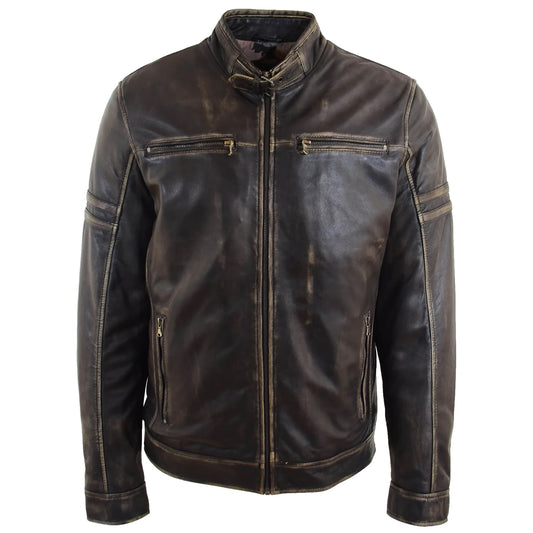
A jacket made from genuine, full-grain leather does not peel. It wears. The surface develops a patina — a natural deepening of color and texture — that makes it look richer and more individual with age. This is not damage. It is the jacket becoming itself.
Understanding Leather Quality: What to Look For
Not all genuine leather is the same. The quality of the hide, how it is processed, and which part of the hide it comes from all effect how the jacket ages, feels, and performs over time.
Full-Grain Leather
Full-grain leather is the highest quality available. It is cut from the outermost layer of the hide, where the natural grain — the tight, interlocked fibre structure — is fully intact. This grain is what gives full-grain leather its strength and durability. It has not been sanded, buffed, or corrected to remove imperfections. Instead, any natural marks are part of the character of the hide.
Full-grain leather develops the richest patina over time, breathes well, and is the most resistant to moisture and wear. A jacket made from full-grain leather, maintained properly, is genuinely a lifelong purchase.
Top-Grain Leather
Top-grain leather is also cut from the upper layer of the hide, but the surface has been lightly sanded and finished to create a more uniform appearance. This process removes some of the natural grain and, with it, some of the durability. Top-grain leather is still good quality and widely used in well-made jackets — it is more consistent in appearance and slightly more stain-resistant than full-grain, but it will not develop quite the same depth of patina over time.
Corrected-Grain and Genuine Leather
These grades sit below top-grain. Corrected-grain leather has had significant surface treatment to disguise imperfections, and genuine leather — despite the convincing name — is lower-grade material, often made from the inner layers of the hide where the fibre structure is looser and weaker. Jackets made from these materials may look fine initially but will not hold up to decades of wear in the way that full-grain or top-grain leather will.
The Most Durable Hides by Animal
Cowhide is the most common choice for leather jackets and with good reason. It is thick, tough, and extremely durable. A full-grain cowhide jacket, broken in properly, can last a lifetime.
Lambskin is softer and lighter than cowhide, with an exceptionally smooth finish. It is favoured for its luxurious feel, but it is thinner and less resistant to abrasion. Well-made lambskin jackets last for many years with the right care, but they require more attention than cowhide.
Buffalo and bison leather are increasingly popular options. Both are thicker than cowhide with a distinctive grain, and they are extremely hardwearing.
How Construction Quality Determines Longevity
The leather itself is only part of the equation. How the jacket is made is equally important when it comes to long-term durability.
Stitching
On a jacket built to last, the stitching should be tight, even, and consistent throughout. Look at the seams closely — irregular stitch spacing, loose threads, or seams that are pulling already are signs of poor construction. Double-stitched seams at stress points (the shoulders, underarms, and pocket openings) indicate that the maker has considered where the jacket takes the most strain.
The thread itself matters too. Waxed or nylon thread holds up far better over time than standard cotton thread, which degrades with moisture and repeated wear.
Panel Construction
A jacket made from fewer, larger panels of leather tends to hold its shape better over time than one assembled from many small pieces. Multiple small panels mean more seams, and more seams mean more potential points of failure. Single-panel fronts and clean back panels are a sign of quality construction.
The Lining
The lining is often overlooked, but it affects both the longevity and the wearing comfort of a leather jacket significantly. A quality lining — typically viscose, satin, or quilted polyester — reduces friction as you put the jacket on and take it off, which over time reduces stress on the leather itself. It also gives the jacket structure and helps it keep its shape.
Check that the lining is properly attached at the cuffs and hem rather than simply glued or loosely sewn. A lining that begins to separate is a sign that shortcuts were taken in construction.
Hardware
Zips, press studs, buckles, and other hardware are high-use components — they are opened and closed thousands of times over the life of a jacket. On a well-made jacket, the hardware should feel solid and operate smoothly. YKK zips are widely regarded as the industry standard for quality and longevity. Branded or heavy-gauge metal hardware on studs and buckles will outlast lightweight alternatives significantly.
Avoid jackets where the hardware feels light, hollow, or stiff in operation from new. If it is difficult or flimsy before the jacket has been worn, it will not improve with use.
Getting the Fit Right from the Start
A leather jacket that fits well from the beginning will age better than one that does not. Leather does soften and adapt to the body with wear, but it cannot compensate for fundamental fit problems.
The shoulder seams should sit at the edge of the shoulder — not hanging over or pulling inward. The chest should allow comfortable movement without excess fabric gathering at the sides. The sleeves should end at the wrist bone. When zipped or buttoned, the jacket should lie flat without pulling.
One common mistake is sizing up for comfort, particularly across the chest. The instinct to give yourself a little extra room is understandable, but a jacket that is too large will look shapeless and will never develop the tailored, personal fit that makes a leather jacket so compelling after years of wear. If the jacket fits close but comfortably when new, it will become progressively more comfortable as the leather breaks in — without ever looking oversized.
The Break-In Period: What to Expect
A new leather jacket — particularly one made from full-grain cowhide — will feel stiff at first. This is normal and is actually a sign of quality. The tighter the grain structure, the more substantial the leather, and the more it needs to be worn and worked before it fully softens.
The break-in period varies depending on the leather and how frequently the jacket is worn. For a cowhide jacket, expect several weeks of regular wear before the leather begins to move freely with the body. Lambskin breaks in much more quickly given its natural softness.
Do not try to rush this process with artificial heat or by forcing the leather. Simply wear it. Consistent wear is what allows the leather to respond to the unique contours of your body and develop a fit that is entirely personal.
Caring for a Leather Jacket Built for Life
A leather jacket lasts decades because it is looked after. Neglect causes drying, cracking, and stiffening that cannot be reversed. The right care routine is straightforward.
Condition regularly. Apply a quality leather conditioner every three to six months. Work it in with a soft cloth, allow it to absorb, then buff lightly. This keeps the leather supple and prevents it from drying out over time.
Clean carefully. Wipe surface dirt with a slightly damp cloth. Use a leather-specific cleaner for deeper cleaning. Never use household detergents or alcohol-based products — they strip the natural oils from the leather permanently.
Dry naturally. If the jacket gets wet, dry it at room temperature away from all heat sources. Radiators and direct sunlight cause leather to dry out too quickly, leading to cracking.
Store properly. Hang on a wide, padded hanger in a cool, dry place out of direct sunlight. Use a breathable garment bag for long-term storage — never plastic, which traps moisture and encourages mould.
Signs You Are Looking at a Jacket Built to Last
When evaluating a leather jacket for long-term quality, look for these indicators:
- Full-grain or top-grain leather clearly stated — not just "genuine leather"
- Even, tight stitching throughout with double stitching at stress points
- Solid, smooth-operating hardware — YKK zips preferred
- Clean, well-attached lining
- Natural smell — real leather has a distinct, earthy scent; synthetic materials do not
- Weight and substance — quality leather has density; thin, lightweight leather suggests lower grade material
- Consistent grain pattern across panels — not overly uniform, which suggests heavy surface correction
Final Thoughts
A leather jacket built for life is not found by looking for the lowest price or the most fashionable silhouette of the moment. It is found by understanding what makes leather durable, knowing how to read construction quality, and choosing something that fits well enough to become yours over time.
The best leather jackets are not timeless because they follow no trends — they are timeless because they are made well, from the right materials, by people who understand what the jacket is supposed to do. Decades of wear, a patina earned through years of use, and a fit shaped to the exact contours of your body. That is what a real leather jacket offers.
Buy it right once. Wear it for life.